

Bali rewards the traveler who leaves a little room in the plan. Yes, there are rice terraces, warm seas, temples, cafés, and sunsets, but the island feels best when you choose fewer bases, move slowly, and let ordinary mornings become part of the journey.
This practical first-timer’s guide explains how to travel to Bali without turning the trip into a race. It covers current entry steps, the best season, a gentle ten-day route, transport, respectful travel, and what to pack. Entry information was checked against official sources in August 2026, but always verify it again before departure.
The short version: fly into Denpasar, stay in only two to four areas, allow extra time for traffic, and treat Bali’s living culture with the same care you give its landscapes.
Before you book: Bali entry checklist
Indonesia’s entry rules depend on your passport and the purpose and length of your trip. Do not rely on a social-media screenshot or an old travel forum. Start with the official sources.
- Passport: for the B1 Visa on Arrival, Indonesia requires a passport valid for at least six months and a return or onward ticket.
- Visa: eligible travelers can use the B1 Visa on Arrival. It costs IDR 500,000, allows a stay of up to 30 days, and can be extended once for a total stay of up to 60 days. Check whether your nationality is eligible before traveling. The electronic version can be requested through Indonesia’s official eVisa portal.
- Arrival declaration: every international passenger must complete the free All Indonesia arrival declaration. It combines immigration, customs, health, and quarantine information and can be completed from three days before arrival.
- Bali tourist levy: foreign tourists generally pay IDR 150,000 per person, once per Bali trip. Pay through the official Love Bali system and keep the QR-code voucher. Some visa and permit holders are exempt.
- Insurance: choose travel insurance that fits your activities and includes medical care and transport. Read the exclusions, especially if you plan to ride a scooter, surf, dive, or hike.
When is the best time to visit Bali?
Bali is warm and tropical all year. Indonesia’s official tourism guidance describes the usual dry season as April to October and the wetter season as November to March, while noting that seasons have become less predictable.
For sunnier days and slightly calmer crowds, consider the shoulder months of April to June or September to October. July and August are popular and busy. The wetter months can still be beautiful: showers often arrive in bursts, the landscape is intensely green, and a slower itinerary makes weather changes much easier to enjoy.
Choose fewer places, not more
Bali looks small on a map, but traffic can turn a short distance into a long transfer. A first trip is more restful when you choose two to four bases instead of changing hotels every night.
- Ubud: rice landscapes, art, food, wellness, and an easy base for central Bali.
- Sidemen: a quieter valley for village walks, mountain views, and unhurried guesthouse days.
- Sanur: a relaxed beach promenade, gentle mornings, and convenient airport access.
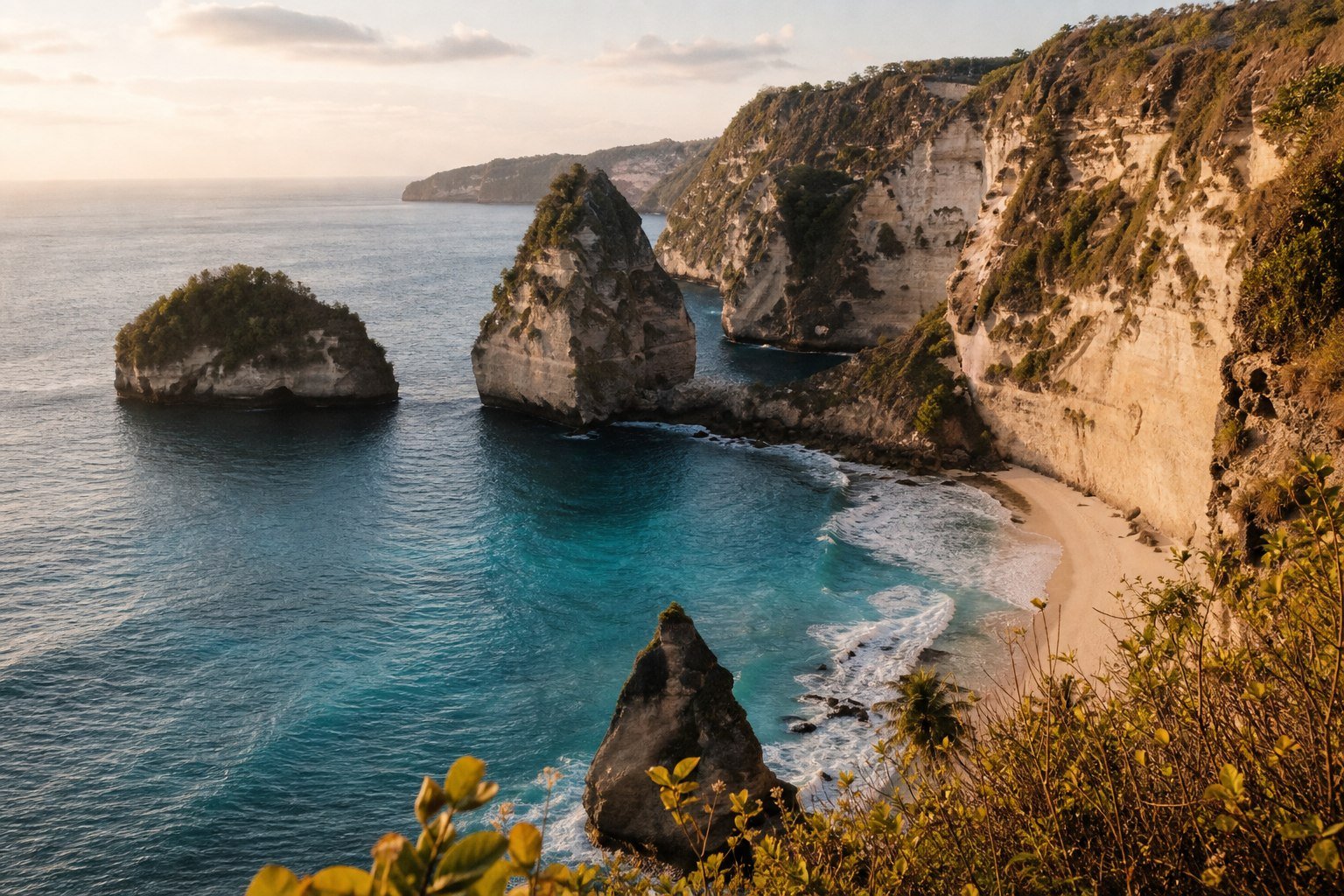
- The Bukit Peninsula: dramatic cliffs and beaches around Uluwatu; best if coast and sunset are priorities.
- Munduk: cooler highlands, waterfalls, and misty scenery for travelers who do not mind longer drives.

A gentle 10-day Bali itinerary
Days 1 to 3: Ubud
Recover from the flight, walk through rice fields early in the morning, browse local studios, and choose one cultural or temple visit with a knowledgeable licensed guide. Keep one afternoon completely open for a long lunch, a swim, or a nap.
Days 4 to 5: Sidemen
Move east into the quieter countryside. Stay somewhere with a view, take a village or rice-field walk with a local guide, and watch the light change over the valley. This is the pause in the middle of the trip.
Days 6 to 8: The Bukit Peninsula
Choose one coastal base rather than chasing every famous beach. Allow a full day for a cove, a swim, and sunset. Ocean conditions can be strong, so follow local warnings and never assume a beautiful beach is safe for swimming.
Days 9 to 10: Sanur
Finish with easy seaside mornings and a final night closer to the airport. Sanur also works well as a departure point for an island extension, but only add one if your schedule has enough buffer for changing sea and weather conditions.
Getting around Bali
There is no island-wide rail system, and walking between towns is rarely practical. For airport transfers and full sightseeing days, a licensed private driver is often the calmest option. Licensed taxis and app-based rides are useful in many areas, although pickup rules vary locally.
Scooters may look convenient, but they are not a beginner-friendly solution. Bali’s current visitor code requires lawful licensing, helmets, roadworthy registered vehicles, and compliance with traffic rules. If your licence, insurance, and riding experience do not all cover the situation, choose a driver instead.
How much should you budget?
Bali can work for modest guesthouse travel, a comfortable boutique trip, or a high-end holiday. Prices vary sharply by neighborhood and season, so build your budget from the trip you actually want rather than a single “Bali per day” number.
- Compare accommodation using the final price, including taxes and service charges.
- Ask drivers for the total price, included hours, route, waiting time, and parking before the day begins.
- Carry some rupiah for small businesses while using secure payment methods where available.
- Keep the official visa fee and Bali levy separate from your daily spending budget.
- Leave a buffer for traffic changes, weather, laundry, temple clothing, and last-minute transfers.
Travel respectfully
Bali is not a backdrop; it is a living island with sacred places, ceremonies, homes, farms, and busy working communities. The province’s official visitor guidance asks foreign travelers to respect temples and religious symbols, dress modestly in sacred and public places, use licensed guides and transport, stay in licensed accommodation, use authorized money changers, and follow local laws.
- Never enter a ceremony or sacred area simply because a gate is open.
- Ask before photographing people, worship, or offerings.
- Cover shoulders and knees where required and follow the instructions at each site.
- Choose local guides and locally owned places when they genuinely suit your trip.
- Reduce single-use waste and carry a refillable bottle where safe filtered water is available.
- Do not work or run a business on a tourist visa.
Health and practical comfort
Speak with a qualified travel-health professional well before departure for advice tailored to your medical history and itinerary. Bring regular medication in its original packaging, use mosquito protection, drink sealed or properly filtered water, and save your insurer’s emergency number offline. Heat and humidity can be tiring; shade, water, and a slower first day are excellent travel tools.
What to pack for Bali
- Light, breathable clothing plus one modest temple-ready outfit
- A light rain layer, even in the dry season
- Comfortable sandals and closed shoes for longer walks
- Sun protection, mosquito repellent, and a refillable bottle
- A small day bag and a waterproof pouch for electronics
- Copies of your passport, insurance, onward ticket, visa, arrival declaration, and levy voucher
- A Type C/F plug adapter if your devices use a different standard
Your final 48-hour checklist
- Recheck the official visa page for your nationality and travel purpose.
- Complete the free All Indonesia arrival declaration.
- Pay the Bali tourist levy through Love Bali if it applies to you.
- Save all QR codes and documents both online and offline.
- Confirm your first-night address and airport transfer.
- Check the weather, allow for traffic, and leave the first day gentle.
Bali does not need to be “done.” Choose a few places, arrive with curiosity, and let the island unfold at a human pace. The long breakfast, the rain on a tiled roof, and the small road you did not plan may stay with you longer than the checklist.
Entry rules and fees can change. This guide was reviewed in August 2026; verify all requirements with Indonesian Immigration and the Bali Provincial Government before departure.
Leave a Reply